

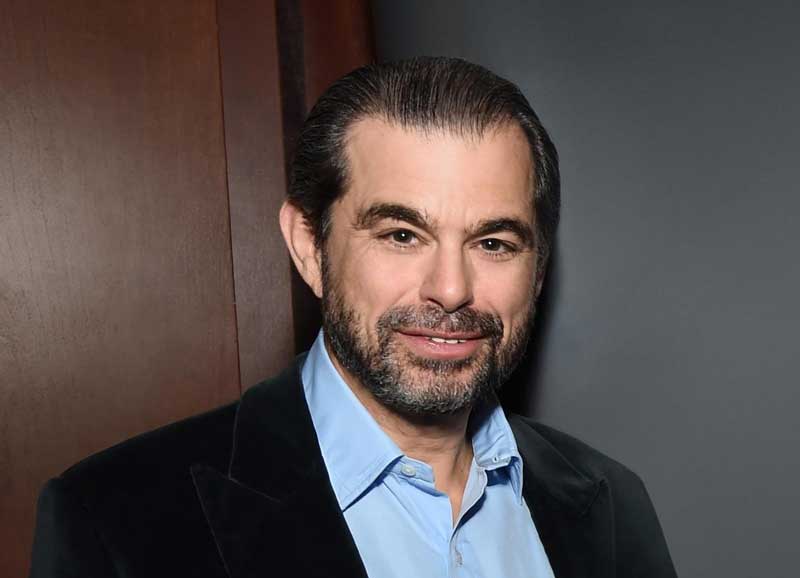
SESAC chairman and CEO John Josephson. (Photo courtesy SESAC)
Established in 1930, SESAC stands out as innovative among the nation’s performing rights organizations (PROs), which collect royalties from radio and television stations, among other outlets, and distribute them to songwriters. In a textbook example of how to grow a business, SESAC was started as a niche operation, focused on European publishers in the classical market and now represents pop artists from Adele to Bob Dylan. Last year the company was purchased by the investment firm Blackstone for a figure reportedly in the $1 billion range.
The deal was orchestrated in good part by John Josephson, who has been on the SESAC board since1992 when the company was acquired by a group led by Allen & Co., where he was a managing director. In 2012 Rizvi Traverse Management gained a majority stake with a cash infusion that SESAC used to further expand its technology infrastructure, catalog and client services. In 2014 Josephson was named SESAC chairman and CEO and began the process of morphing SESAC from a PRO to an “MRO” (Music Rights Organization).
In 2005 he co-founded Downtown Music, a leading independent music company, where he remained a board member and investor in the company until assuming his expanded duties at SESAC in 2014.
In addition to being a genuinely nice fellow, Josephson is a certified brainiac (which explains why we enjoy talking to him so much!). He received an M.B.A. with High Distinction in 1987 from Harvard Business School, where he was elected a George F. Baker Scholar, and received a BA from Cornell, where he graduated summa cum laude.
MaxTheTrax editor in chief Paula Parisi took the opportunity of the Music Modernization Act’s powering through Congress to talk to him about the value of music, the overall outlook of the business and the future for songwriters.
MaxTheTrax: How did you go from investment banker to PRO — or as you say, MRO — executive, and does that possibly say something about what you perceive as a bright future for the music business?
Josephson: While I was at Allen & Company, I worked with many IP-based businesses — film, television and music companies. So I had a good general understanding of the value they can create over time. I also had a long history with SESAC, and understood that it was a powerful and durable franchise. I got a lot of quizzical looks from people when I joined the company full time as CEO in 2014, as the general view at that time was that the music industry was challenged. While the industry had been through a rough period, I believed it had bottomed out at a sustainable base from which the it could start to grow again.
MaxTheTrax: Where are the growth areas?
Josephson: At SESAC, we plan to grow by building a global licensing and administration platform that incorporates multiple rights categories (i.e., mechanical as well as performance) as well as geographic territories (i.e., not just the U.S., but Europe, Africa, the Middle East and, ultimately, Asia as well). We also see significant growth opportunities in our core U.S. performing rights franchise.
MaxTheTrax: What’s the elevator pitch for the music industry as a whole?
Josephson: It’s all about creating user interfaces and platforms (like Apple Music and Spotify) that are compelling for consumers and bring them back to consumption models that can be monetized. From an investor perspective, the current momentum started with a report Goldman issued in the fourth quarter of 2016. They were calling out the fact that the industry had reached the sustainable bottom I mentioned earlier and that there were significant, exciting growth opportunities in music as a result of the growth of streaming. I think a lot of that was driven around the role they anticipated playing in the Spotify IPO. They were beginning to seed the market. [Editor’s note: which they never got to harvest; Spotify went public in April through a direct listing, eliminating the necessity for an investment bank]. The first deal following the issuance of the report was our sale to Blackstone. The fact that Blackstone was willing to make an investment of such magnitude created a broader interest in music among members of the finance community.
But to get back to the elevator pitch, the industry is positioning itself to work more constructively with the digital platforms. The Music Modernization Act is a prime example of that. But also, you have multiple players that have developed more compelling user interfaces, making it easier — more fun and interesting, particularly younger people — for consumers to experience it as a paid subscription platform as opposed to trying to steal it, as was the case 10 or 15 years ago. That’s a big plus. Also, 15 years ago there was only iTunes; now there are five or six solid music platforms all competing against each other, which creates a more balanced commercial negotiating dynamic with music rightsholders.
MaxTheTrax: The Blackstone deal was huge, at a reported $1 billion. Being privately held, I know you are not going to confirm that price, but in general how did it go down?
Josephson: We had received a few inbound calls from private equity firms, but we weren’t looking to sell the company and we never held an auction. Blackstone reached out to us and were aggressive in trying to move forward quickly. We ultimately hired Allen & Co. and Goldman as advisors, but it was really something that Kelli Turner (SESAC’s EVP of Operations, Corporate Development and CFO) and I were the driving force behind.
MaxTheTrax: How big is your performing rights catalog?
Josephson: We have more than 400,000 songs that we administer on behalf of 40,000 affiliated composer, publishers and songwriters. Among the artists we represent are Bob Dylan, Neil Diamond, Green Day, REM and of course Adele, who we got a lot of attention for signing last year.
MaxTheTrax: With more players getting into the PRO space, how tough is it to maintain and grow market share?
Josephson: For us, the dynamic hasn’t really changed very much. Our domestic PRO has a significant audiovisual music component and we haven’t seen much change in this part of the business. Most of the competitive impact has been in what we call the “audio-based” (think radio) segment. But you have to remember that in addition to our domestic performing rights business, we also have a large rights administration platform and are licensing actively in Europe and elsewhere. We’re trying to build a global business. I would say we’re somewhat of a hybrid rights company that can’t be pigeonholed. For example, we are doing U.S. rights administration for some of the largest streaming companies — their entire repertory of music. I’d say we’re as much a technology company as we are a music company at this point.
MaxTheTrax: How are things shaping up across the different platforms?
Josephson: Today, the flow of royalties across all our different platforms – not just our domestic PRO, but our mechanical rights administration business, and European business – is well over $400 million a year. That makes us one of the largest rights organizations in the World.
MaxTheTrax: Someone suggested to me that Global Rights Management generates more terrestrial radio revenue than SESAC.
Josephson: There’s no way for me to know their exact share but I’d be surprised if they were materially larger in their radio market share than SESAC. Also, you need to bear in mind that SESAC’s audiovisual business is bigger than our audio-based — i.e. radio — music business. And these days so much of the audio-based business is not just about terrestrial, it’s about the digital platforms.
MaxTheTrax: And they also have a large concentration of that type of top 40 artist, whereas your repertoire is much broader.
Josephson: That’s true, although we also have a core group of top performing artists. I invested in SESAC in ‘92, and in ’95 we started on the path of substantially enhancing our repertoire in order to drive the growth of our domestic PRO, just as Global is doing now. But our business today is much broader than just “radio music.
MaxTheTrax: And while you have certainly done an amazing job, ASCAP and BMI are twice the size of SESAC, so your boat’s got a lot of lift left!
Josephson: Yes. We’re about 20 years into our build-out, and we’ve already expanded into audiovisual and global licensing and mechanical rights. We believe we have lots still to do (and lots of growth) as we build our global platform.
MaxTheTrax: Kobalt, if you look at their last round of funding and what was reported on it in October, was valued at about $789 million, whereas Blackstone’s reported purchase price would put SESAC at a valuation of about $1 billion. And I think some reports, in crunching the numbers, speculated the purchase figure may even have been higher.
Josephson: Either way, we have a long-term partner in Blackstone and we believe we can build SESAC into a substantially more valuable company even relative to their cost basis. Blackstone certainly has a lot of smart people working at the firm, so their interest speaks to the opportunity that lies in what we’re building. And one of the reasons we wanted to be in business with them was the fund that invested in us was a new, longer-duration vehicle [Core Equity] that plans to hold for 10-15 years. For a typical venture capital or private equity fund, the timeline is four to five years. We’re going to go through more organic growth and we’re looking to do more acquisitions. We’ve got a lot of exciting plans for the future.
Comments are closed.